



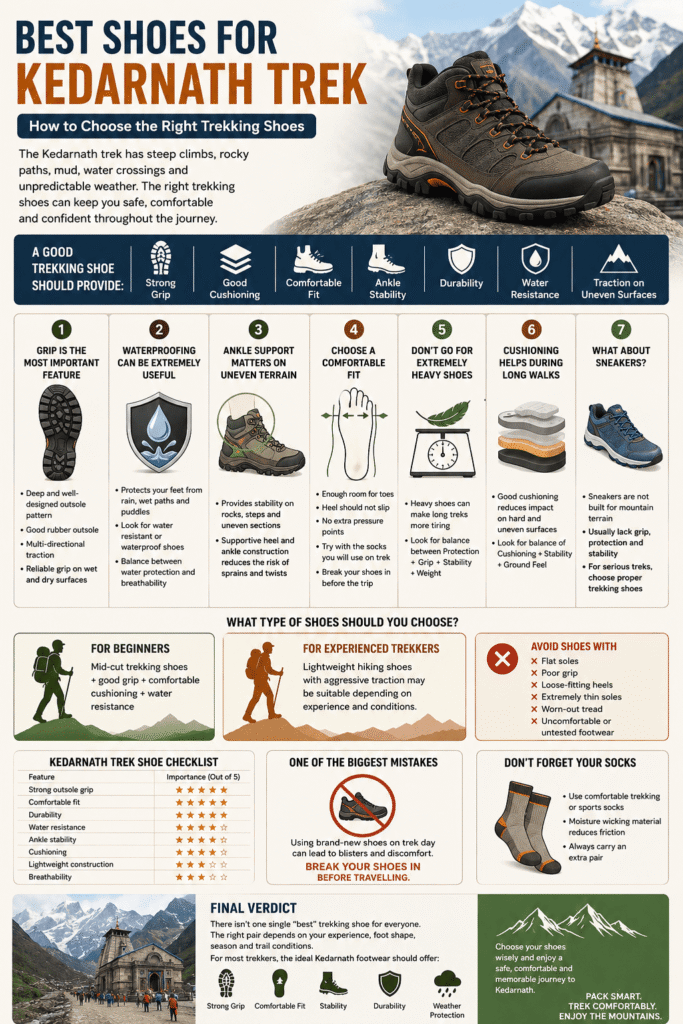
Planning the Kedarnath trek? One of the most important things you need to get right before starting your journey is your footwear.
The Kedarnath route isn’t an ordinary walk. You’ll encounter steep sections, uneven paths, rocks, muddy patches, stairs, and changing weather conditions. Your shoes need to provide confidence and comfort throughout the journey.
Whether you’re a first-time trekker or someone who regularly explores the mountains, choosing the right trekking shoes for Kedarnath can make a huge difference.
What Makes the Kedarnath Trek Different?
The Kedarnath trekking route can involve a combination of paved sections, rocky terrain, stairs, uneven ground and muddy areas. Weather conditions can also change quickly in the mountains.
Because of this, regular running shoes or casual sneakers may not be the ideal choice for the entire trek.
A good pair of trekking shoes should provide:
- Strong grip
- Good cushioning
- Comfortable fit
- Ankle stability
- Durable construction
- Water resistance or waterproofing
- Reliable traction on uneven surfaces
1. Grip Is the Most Important Feature
When you’re walking on rocks, uneven paths or wet surfaces, grip becomes extremely important.
Look for trekking shoes with a deep and well-designed outsole pattern. The sole should provide traction on different surfaces rather than being completely flat.
This becomes particularly useful when the trail is wet or muddy.
Look for:
✓ Deep tread pattern
✓ Good rubber outsole
✓ Multi-directional traction
✓ Reliable grip on wet and dry surfaces
Don’t choose trekking shoes only because they look rugged. The outsole is one of the most important parts of the shoe.
2. Waterproofing Can Be Extremely Useful
Mountain weather can change quickly.
Rain, wet paths and puddles can leave your feet uncomfortable if your shoes absorb water easily.
For a Kedarnath trek, consider shoes that offer water resistance or waterproof construction, depending on the conditions you expect.
However, remember that waterproof shoes can sometimes be less breathable than regular mesh shoes.
A practical balance between water protection and breathability is ideal.
Extra Tip
Even with water-resistant footwear, carrying an additional pair of socks can be useful during a multi-day mountain trip.
3. Ankle Support Matters on Uneven Terrain
Unlike a normal road, a mountain trail doesn’t always provide an even surface.
Your foot may land on rocks, steps or uneven sections.
A trekking shoe with a supportive construction around the heel and ankle can provide a more secure feeling.
If you are inexperienced with trekking, prioritise a shoe that feels stable and secure rather than choosing a lightweight shoe purely for its appearance.
4. Choose a Comfortable Fit
Your trekking shoes should feel comfortable before you begin the trek.
Don’t buy a pair for the first time and immediately take it to the mountains.
Break your shoes in before your trip.
Wear them during walks and shorter hikes so you can identify any uncomfortable pressure points.
When trying them on:
- Keep enough room for your toes.
- Make sure your heel doesn’t slide excessively.
- Ensure the shoe doesn’t squeeze your feet.
- Try them with the socks you plan to use during the trek.
Remember that your feet can swell slightly during long periods of walking, so extremely tight footwear isn’t a good idea.
5. Don’t Go for Extremely Heavy Shoes
A common mistake is assuming that heavier trekking shoes are automatically better.
That’s not necessarily true.
You’ll be walking for several hours, so unnecessarily heavy footwear can make the journey more tiring.
Look for a balance between:
Protection + Grip + Stability + Weight
For a first-time Kedarnath trekker, a moderately lightweight trekking shoe with a strong outsole can be a practical choice.
6. Cushioning Helps During Long Walks
The Kedarnath trek involves extended periods of walking.
A comfortable midsole can help make the journey more pleasant, especially when you’re spending hours on hard or uneven surfaces.
However, don’t choose a shoe based only on how soft it feels.
A trekking shoe should provide a combination of:
Cushioning + Stability + Ground Feel
An excessively soft shoe may not always feel as stable on uneven terrain.
7. What About Sneakers?
Sneakers can be comfortable for everyday use, but they aren’t necessarily designed for mountain trekking.
Many casual sneakers have relatively smooth soles and limited protection against rocks, mud and uneven terrain.
For a serious mountain trek, proper trekking or hiking footwear is generally a better choice than fashion sneakers.
If you’re only walking a short, well-maintained section, normal sports shoes may feel adequate, but footwear requirements change considerably as terrain becomes steeper, wetter and more uneven.
What Type of Shoes Should You Choose?
For Beginners
If this is your first mountain trek, look for:
Mid-cut trekking shoes + good grip + comfortable cushioning + water resistance
This combination can provide a useful balance of stability and comfort.
For Experienced Trekkers
Experienced hikers may prefer lighter footwear depending on their experience, route conditions and personal preference.
A lightweight hiking shoe with aggressive traction can be suitable for some trekkers.
Avoid
Try to avoid footwear with:
❌ Flat soles
❌ Poor grip
❌ Loose-fitting heels
❌ Extremely thin soles
❌ Worn-out tread
❌ Uncomfortable or untested footwear
Kedarnath Trek Shoe Checklist
Before leaving for your trip, check your footwear against this simple list:
| Feature | Importance |
|---|---|
| Strong outsole grip | ⭐⭐⭐⭐⭐ |
| Comfortable fit | ⭐⭐⭐⭐⭐ |
| Durability | ⭐⭐⭐⭐⭐ |
| Water resistance | ⭐⭐⭐⭐ |
| Ankle stability | ⭐⭐⭐⭐ |
| Cushioning | ⭐⭐⭐⭐ |
| Lightweight construction | ⭐⭐⭐ |
| Breathability | ⭐⭐⭐ |
The exact priorities can change depending on the season and trail conditions.
One of the Biggest Mistakes: New Shoes on Trek Day
Imagine reaching the starting point of your trek and putting on a brand-new pair of trekking shoes for the first time.
Not a great idea.
Even an excellent shoe can cause discomfort if your feet aren’t accustomed to it.
Break your shoes in before travelling.
Take them on several walks and, if possible, a few longer walks with the same socks and type of load you’ll use during the trek.
Don’t Forget Your Socks
Good trekking shoes work better with suitable socks.
Avoid relying on thin everyday socks if you’re going to be walking for long hours.
Look for comfortable trekking or sports socks that manage moisture and reduce friction.
And always carry an extra pair.
Final Verdict: What Are the Best Shoes for Kedarnath?
There isn’t one single “best” trekking shoe for everyone.
The right pair depends on your experience, foot shape, season and the conditions you encounter.
However, for most first-time trekkers, the ideal Kedarnath footwear should offer:
Strong Grip + Comfortable Fit + Stability + Durability + Weather Protection
Don’t choose your trekking shoes simply because they look adventurous.
Choose them because they are comfortable, reliable and suitable for the terrain.
After all, when you’re climbing through the mountains, the last thing you want to worry about is your footwear.
Pack Smart. Trek Comfortably. Enjoy the Mountains.
Your Kedarnath journey is about the experience — the mountains, the scenery and the memories.
Make sure your shoes are ready for the journey.
